
Access to financial advice plays a crucial role in combating financial inequalities, especially for women facing the gender pay gap.
📌 TL;DR
- A persistent pay gap has a compounding effect on savings, retirement/superannuation, and wealth.
- Single parenthood (often carried by mothers) increases financial risk through less time, more constraints, and more unexpected events.
- Financial advice can reduce costly mistakes, but access is unequal (cost, availability, trust, regulatory complexity).
- Simple actions (budgeting, simple products, understanding, protection) are often the most effective.
Access to financial advice plays a crucial role in combating financial inequalities. Many people (often unconsciously) make poor decisions by relying on unqualified sources or by not seeking professional advice. The result: loss of income, higher taxes, missed opportunities, and less savings.
For women, the challenge is even greater: pay gaps, lower superannuation balances in Australia (or lower retirement funds in France), overrepresentation in some precarious jobs, career breaks, part-time work, mental load, etc.
✅ What advice can provide
- Prioritising goals (security, projects, retirement).
- Tax optimisation and wealth structuring.
- Reducing “expensive mistakes” (fees, poor products).
- A protection plan: insurance, income protection, estate planning.
⚠️ What often gets in the way
- Perceived cost / tight budgets.
- Lack of trust / bad past experiences.
- Product complexity & jargon.
- Limited access (advisor availability).
1) The gender pay gap
The gender pay gap is not only a “salary” issue: it’s a wealth issue. Less income today = less savings, less investing, less compound interest, and a gap that widens over time.
| Country | Observation (order of magnitude) | Typical impact |
|---|---|---|
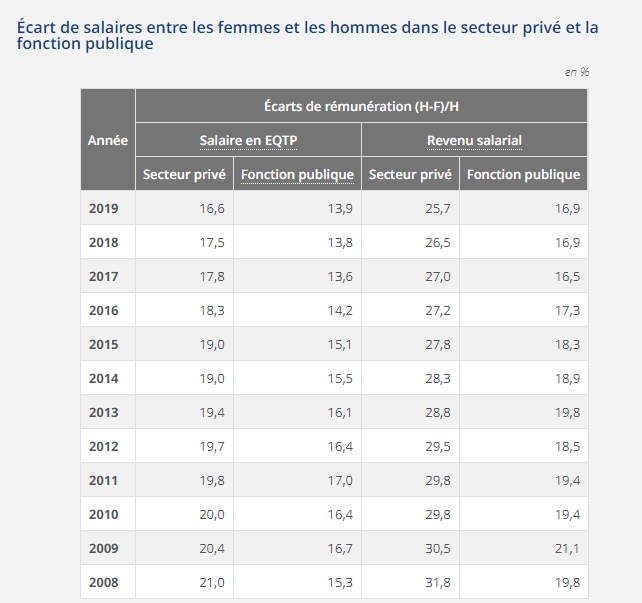
| France | A persistent pay gap (according to INSEE, varying by indicators and years). | Lower saving capacity + lower retirement outcomes. |
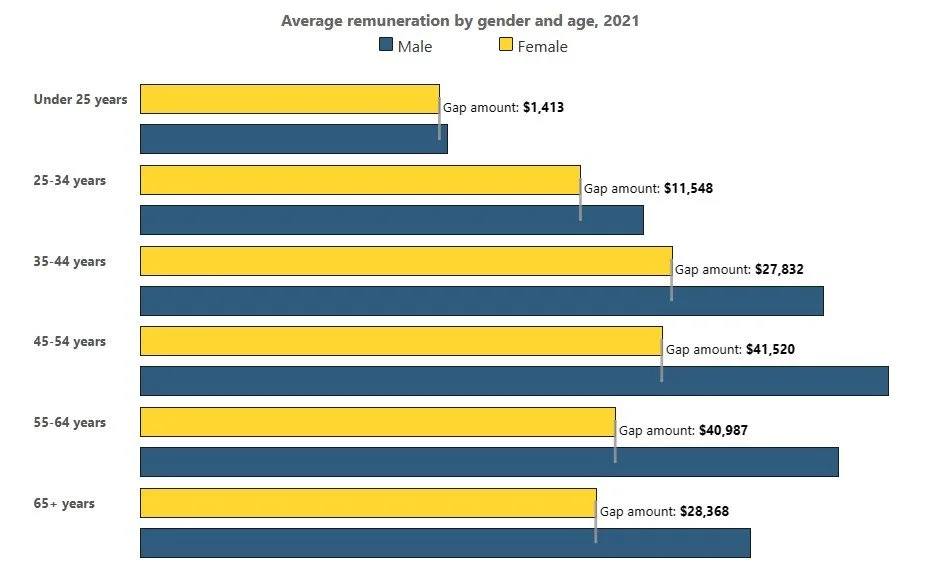
| Australia | The gender pay gap is regularly tracked by WGEA (and varies by age/industry). | Direct impact on superannuation (contributions + returns). |
| United States | Gaps depend on sources and methodologies (median income, full-time, etc.). | Wealth accumulates more slowly, especially with career breaks. |
For France, here is a visualisation (INSEE):
Source: INSEE (imported chart).
In Australia, the WGEA publishes useful charts, notably by age group:
Source: WGEA (imported chart).
The largest gaps often occur at certain ages (career effects, interruptions, part-time work, promotions). This has a massive impact on long-term wealth, as shown in the chart below:
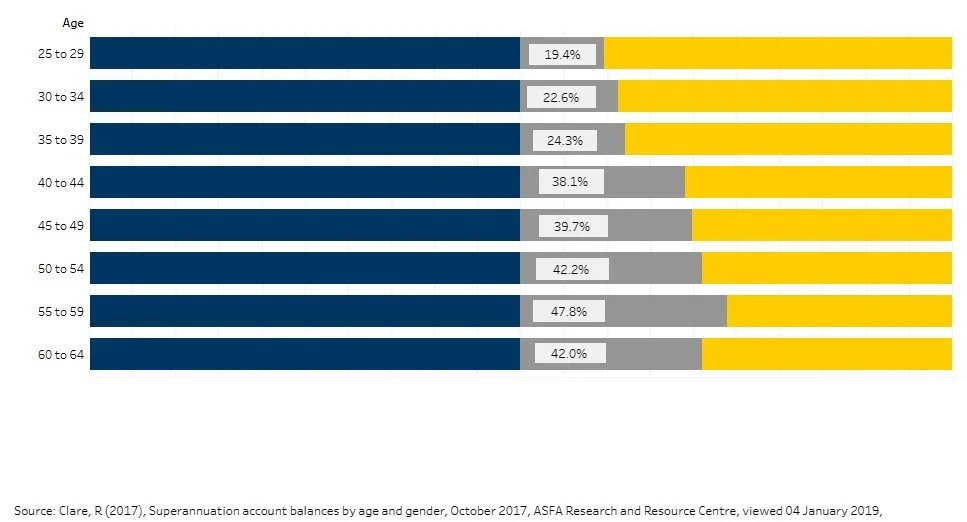
Source: WGEA (imported chart).
Key idea: the pay gap is not “just” an annual gap: it’s a compound-interest gap over 10–30 years.
2) Single-parent families
The pay gap and the prevalence of single-parent families (often led by mothers) are interconnected. These households are more exposed: lower income, more childcare constraints, less flexibility, more unavoidable costs.
🔎 Why is it a risk multiplier?
- Tighter budgets + shocks are harder to absorb.
- Limited time to compare/optimise (products, taxes, insurance).
- Reduced saving capacity → delayed investing.
- Financial stress → short-term decisions, sometimes unfavourable.
3) The issue of financial advice
In Australia, the financial advice industry has largely adopted a fee-for-service model. This can reduce certain conflicts of interest, but it also makes advice difficult to access for those who need it the most. The “floor cost” of serious support can be high (licensing, professional insurance, compliance, software, etc.).
In France, fee-based advice exists, but it more often coexists with commission-based models, with a strong sensitivity around transparency.
| Country | Common model | Consequence |
|---|---|---|
| Australia | Fees | Advice can be too expensive for lower-income households. |
| France | Commissions + fees (depending on providers) | Need for transparency; trade-off between upfront cost vs value. |
✅ 5 simple (and powerful) actions
- Create a budget: an extra €100/$100 per month can transform a long-term trajectory.
- Prioritise simplicity: often more robust and easier to stick with over time.
- Understand before you buy: ask questions, request scenarios, check the fees.
- Be wary of “quick” promises: wealth is built with patience and discipline.
- Ask for help when needed: specialised support, including pro-bono depending on circumstances.
In Australia, you can consult White Ribbon (pro-bono depending on cases and partners): https://www.whiteribbon.org.au/
Note: this article is informational and does not constitute personal financial advice.
If you have any questions or need help, feel free to contact me.